A portion of my engineering portfolio. These are several projects I’ve worked on and my role in each.
I currently work at the Allen Institute as a systems design engineer. The Allen Institute is a non-profit research institute in Seattle dedicated to research and Open Science in neuroscience. On a typical day I am designing new hardware systems for a research project, fixing issues on existing systems used in active experiments, or building rapid prototypes to prove out a concept. My work covers the full project lifecycle, from an initial idea brought to us by a scientist to operational rigs used to collect data for published research. Many of the projects I work on are available open-source at the Allen Neural Dynamics Hardware page.
Two of my favorite past projects are the SARP Rocket where I worked with a great team of wonderful people to create a category-winning rocket, and my work on small satellites at MSNW where a side project led to a novel ammeter sensor design suitable for space or ground use.
Allen Institute - Hardware Engineering
Fall 2022 – Current
Designed and integrated hardware instruments for neuroscience research. Collaborated with scientists in the Brain Science and Neural Dynamics groups at the Institute to develop hardware systems. Designed and developed projects, taking a key role developing ideas into full systems with interacting subsystems.
Many of my projects are published as open-source hardware on the Allen Neural Dynamics Hardware page, including the projects below.
I’ve also designed a number of PCBs for various instruments – links soon to come!
Main Role: Systems Design Engineer
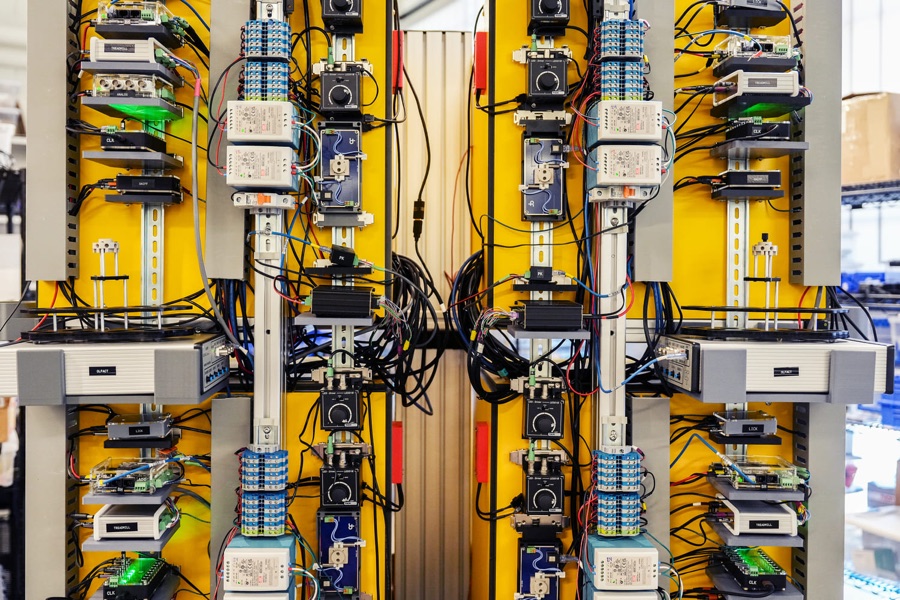
Multiple Stimulus Tool Stage — Lead Engineer
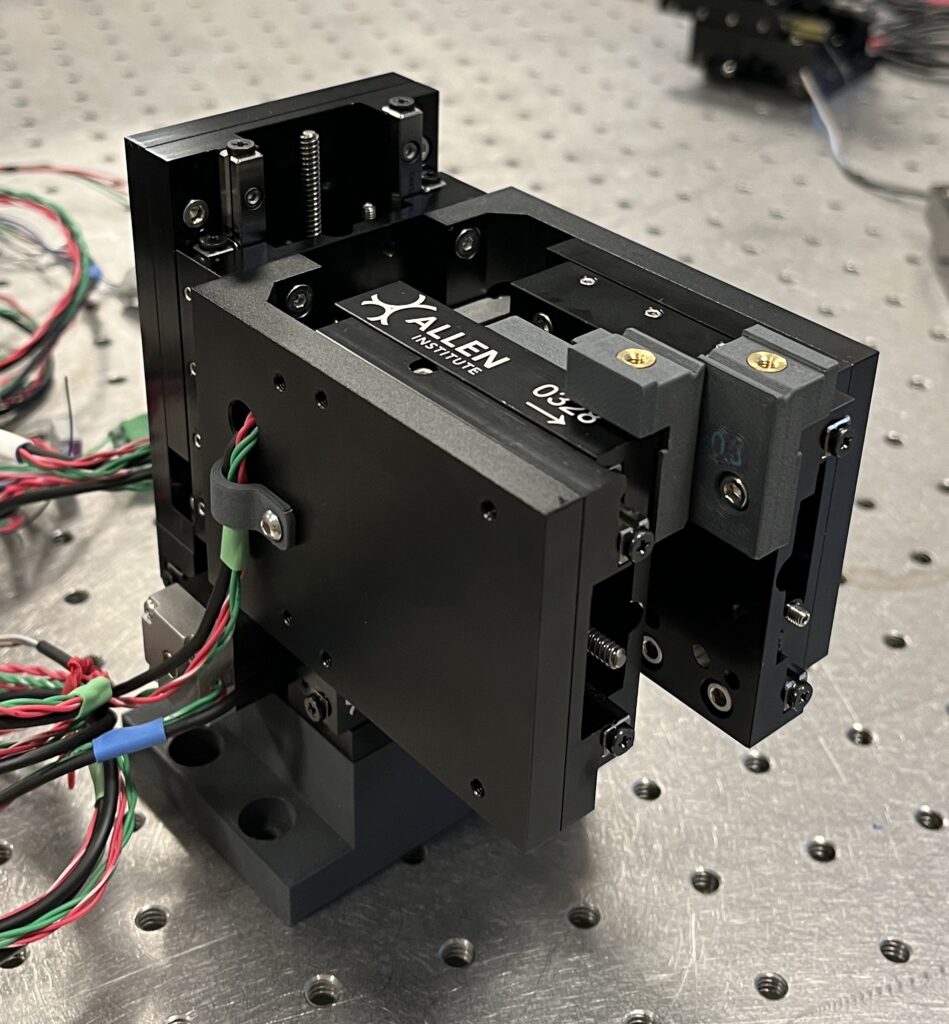
Main engineer on the Multiple Stimulus Tool Stage, a compact, cost-effective, modular stage for positioning stimulus tools in mouse behavior tasks. The stage can travel >100mm/s with <100µm precision. I designed the entire stage, from selection of cross roller bearings for rigidity to final assembly and orientation of the prototype units. The design is open source and modular to help researchers focus on collecting data. This stage was presented at the Society for Neuroscience 2024 conference.
Key specs:
- <100µm positioning precision
- Retracts at 100mm/s, faster than mouse licks
- 30mm travel
- Cross roller guides and an anti-backlash nut
- Optical endstop
- Driven by bipolar stepper motors; works with a Harp-compatible stepper driver or any standard stepper driver
The stage positions a range of tools for mice, including lick spouts, odor tubes, and mouse joysticks.
Used on the Dynamic Foraging and VR Foraging behavior platforms (below) in addition to other Allen Institute projects.
Links: Design files and datasheet
Behavior Platforms: Dynamic Foraging & VR Foraging
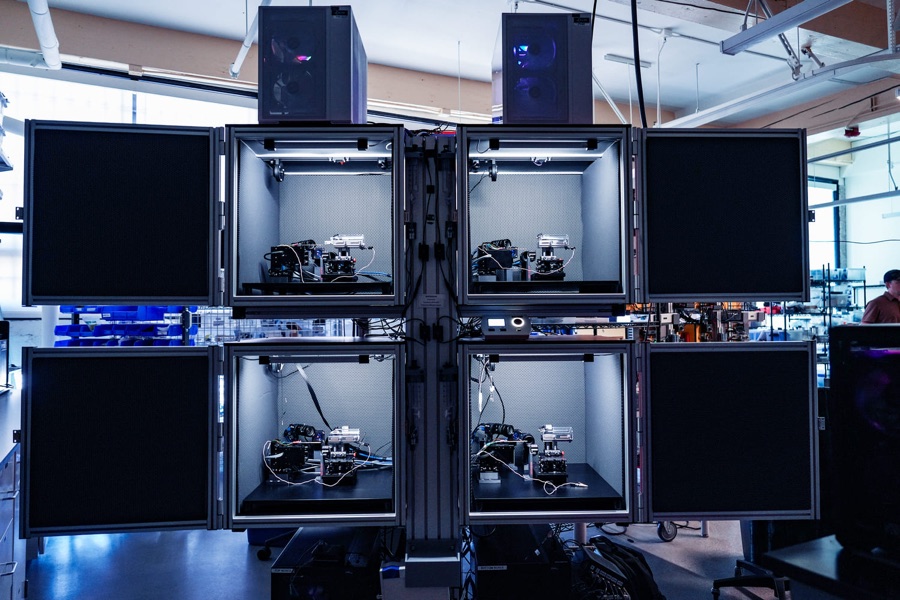
Helped design the behavior platforms for the Dynamic Foraging and VR Foraging tasks. Both support multi-modal sensory inputs and integrate with the Allen Institute headframe system.
My focus was system integration, especially on the Dynamic Foraging platform. I ensured all parts fit and worked together mechanically and electrically, and that the full system worked reliably end to end: hardware ran smoothly with our software team’s code, lighting was matched to each camera, and every session’s data was collected, kept together, and uploaded.
More than 30 Dynamic Foraging platforms and more than 20 VR Foraging platforms are in use at the Allen Institute.
Links: Dynamic Foraging CAD · VR Foraging CAD
Booz Allen Hamilton - C5ISR Team
Fall 2019 – Fall 2022
Worked with government clients to develop rapid prototype systems to accomplish C5ISR missions. Led several technical teams and traveled to represent company to Director- and VP-level clients. Helped develop and write proposals for new projects and contracts. Designed USV electrical and mechanical systems, including a payload integration box that reduced integration time for new payloads by 50% and setup time before field deployments by 25%.
Main Roles: Staff Mechanical Systems Engineer, Project Technical Lead
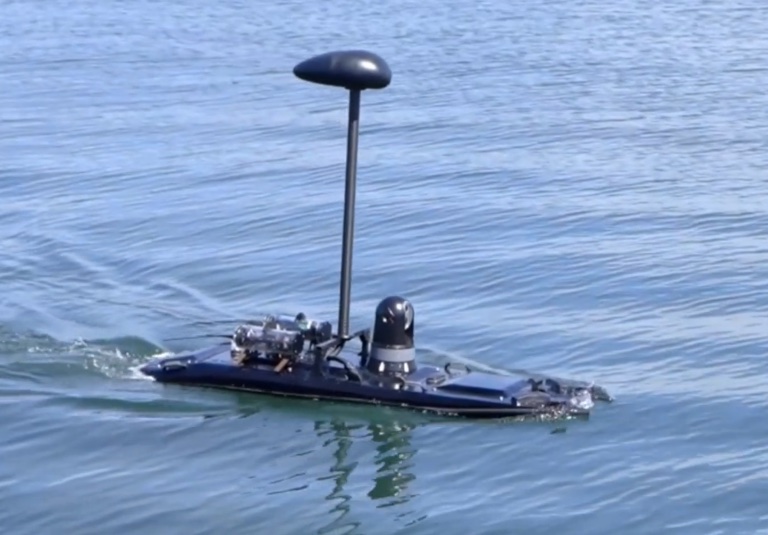
Unmanned Surface Vehicle
As a member of the C5ISR team I designed, built, and tested equipment to be used on our testbed Unmanned Surface Vehicle (USV). This included solving many problems including these:
- Payload Integration Box Our team was spending significant time customizing sensor payloads to operate with our USV interfaces. A peer and I developed a plan to standardize our payload integration and provide power regulation, communications, networking, and actuator control from a single box rather than several discrete interfaces. We developed the concept, pitched it to our team leadership, and received funding to move ahead. We designed and built the electrical circuits, PCBs, mechanical housing, wire harnesses, and more. The box was a major success, reducing new payload box integration time 50%.
- USV Deployment Cart Our USV was designed for rapid deployment in low-infrastructure environments by a team of 4. However, many of our system demonstrations were at locations with boat launches and paved ramps or beaches. To simplify logistics I designed a ground support system for our USV including stands to showcase our USV elevated off the ground and a cart for deploying and transporting the USV, even on sand. Support equipment reduced staff requirement for critical steps to 2 while maintaining all previous capabilities.
Secure Communications/Mechanical Integration
To help our clients meet their missions I designed, built, and tested secure communication systems including private 4G/5G systems and vehicle-based ruggedized communication units.
My contributions consisted of integrating COTS parts into existing systems and serving as project technical lead. As a technical lead I maintained deep technical experience with the full systems that we developed, led technical design of new systems, and led small technical teams. I also represented our team at client sites, at system demonstrations, and as contract extensions were developed.
Contact me for more information, I would be happy to discuss the project in more detail.
Society for Advanced Rocket Propulsion (SARP)
Fall 2017 – Summer 2018
A university club-designed and -built hybrid sounding rocket. Target altitude 30,000 ft, 1st in class at Spaceport America Cup (international rocket competition for collegiate teams).
Main Role: Recovery Coupler Lead, Structures Team
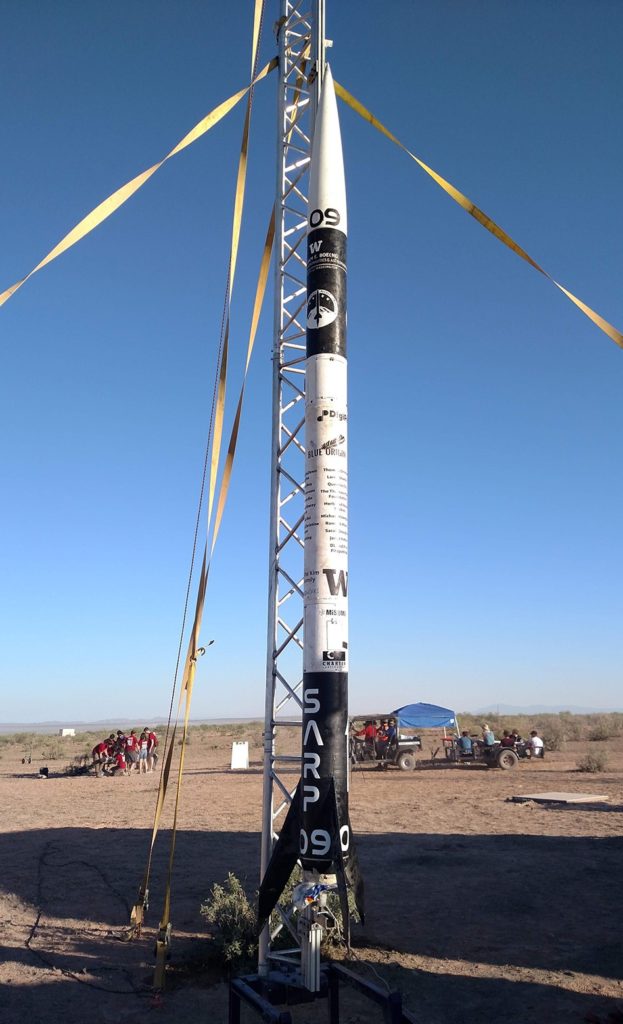
Major Contributions
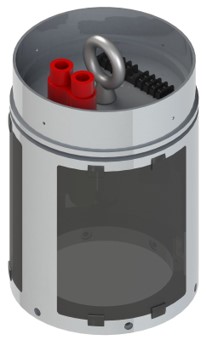
Major contributions included:
- Recovery Coupler Lead: Managed small team building critical structural coupler (at right) connecting two halves of rocket and recovery and propulsion systems. Led design requirement definition, design reviews, etc. Presented to mixed student and faculty audiences at Structural Design Reviews (5-50 attendees).
- Integration: Communicated with other subsystems to integrate their systems into the coupler. Coordinated system testing.
- Engineering: Led design development, redesigned upper bulkhead when structural requirements rapidly changed 1 week before design freeze
Design Context
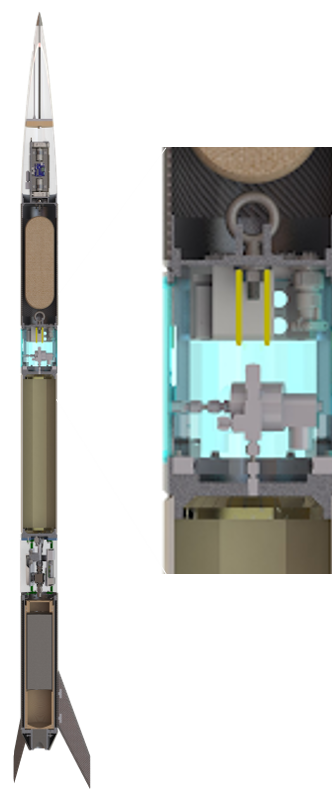 As shown, the Recovery Coupler mates the two halves of the rocket – above, a small payload, parachutes, and other recovery equipment, and below, propulsion systems. This drove the focus of the project to emphasis integration with adjacent systems and structural integrity.
Senior Capstone
Collaboration with Blue Origin
Winter 2018 – Spring 2018
Led a team to design a robot to ensure safe rocket recovery. Organized team, set priorities, and applied mechanical design principles to robot design.
Main Role: Project Lead and Mechanical Design Engineer
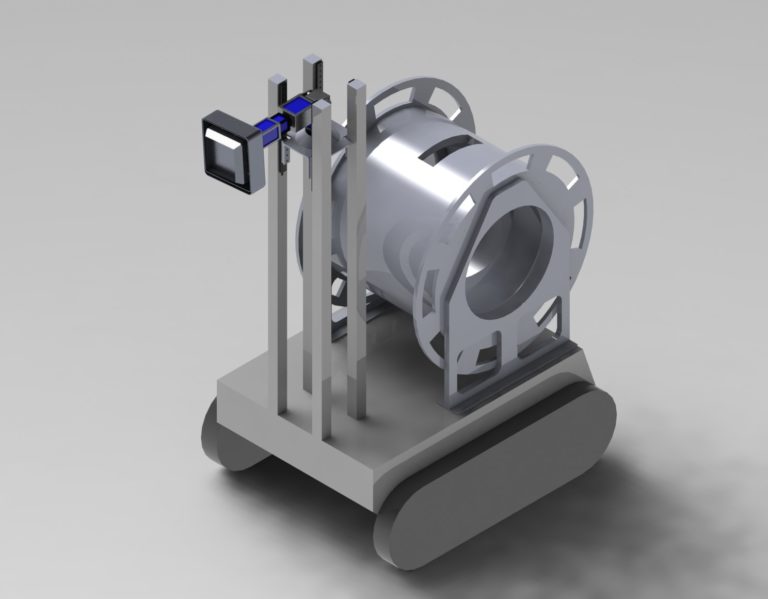
Major Contributions
Major contributions included:
- Project Management: Ensure project stayed on track and within parameters. Prioritized tasks, provided guidance to project.
- Mechanical Design: Worked with team to design robotic system. Performed hand calculations to determine forces and design parameters.
- Communication: Co-presented at design reviews and final presentation. Wrote reports to update partners at Blue Origin and the university. Led progress meetings and smaller design meetings.
Design Context
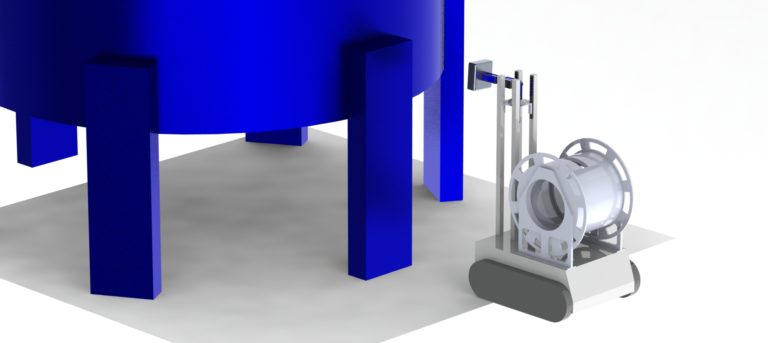
The robot had to operate with a New Glenn booster, in a harsh marine environment filled with volatile rocket propellant, on a steel ship deck at sea. The base of the rocket body was 8 ft above ground, requiring a long arm for easy access to panels. The manipulator featured a spring bed to allow easy mating with ports on rocket. Due to extreme environmental conditions, all electrical and mechanical systems required additional insulation and protection.
Overall robot dimensions: 4 ft wide x 6 ft long x 9 ft tall
Intellegration
Summer 2016, December 2018 – May 2019
Designed and maintained 3D CAD models, built and designed mechanical systems, and produced 3D-printed parts with additive manufacturing. Produced several scale models for demonstration and contract bids. Oversaw product lines, reducing overhead through ambidextrous and multi-use parts. Worked with mill/lathe and hand tools to fabricate custom parts.
Most recent work was temporary, performing the above tasks to assist in a large ramp-up of production and sales due to new contracts.
Main Role: Mechanical Engineer and Mechanical Design Engineer
Mechanical Part Design
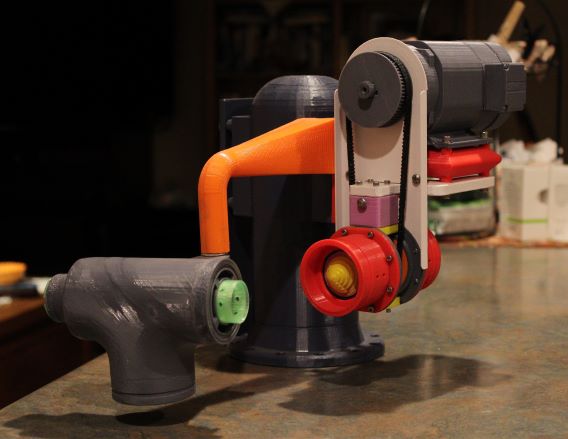
Using Solidworks 3D CAD and paper sketches, mechanical systems and parts of systems were designed from white board sessions and previous designs to be improved on. Due to changing design requirements, many legacy parts were also redesigned to properly integrate with linked parts and reduce machining complexity. Examples include combining left- and right-handed parts into one universal part, optimizing parts for weight and strength, and manufacturing low-stress parts using in-house 3D printing rather than outsourced CNC milling.
Project: Long Reach Tools
Primary focus of work in Winter 2019.
System Description: An operator holds the tool from the top handle, operating a handle lever to open and close jaws at the end of the tool. Tool length can be adjusted by adding or subtracting extension poles. A wide variety of jaws are available to grip varying objects, from 10″ steel cylinders to a dropped wrench.
Primary application is in the nuclear industry for plant maintenance, where a consistent and reliable long-reach tool allows operators to stay efficient while remaining a reasonable distance from radiation sources.
Responsibilities and Contributions: Converted a convoluted file system of old parts and handwritten manufacturing notes into an organized full engineering package, including updated parts, optimized designs, and all useful manufacturing documents. Coordinated inventory of legacy parts and interoperability between legacy parts and the small number of redesigned parts (~75% of parts required no major design changes). Added new interchangeable jaw options and created simple promotional animations showing operation of all jaw options.
Project: "Anti-Gravity" Balance System
Using an arm similar to a scissor lift, a finely tuned counterbalance system allows easy movement of heavy objects, hence “anti-gravity”. To balance the system properly, close attention must be paid to the weight of each individual screw, bolt, and the locations of holes.
A small desktop model was designed and built, along with a full-scale product with updated design and over 15ft reach.
MSNW (Satellite Systems)
Summer 2017
Small company working primarily on NASA and Air Force research contracts specializing in advanced space propulsion.
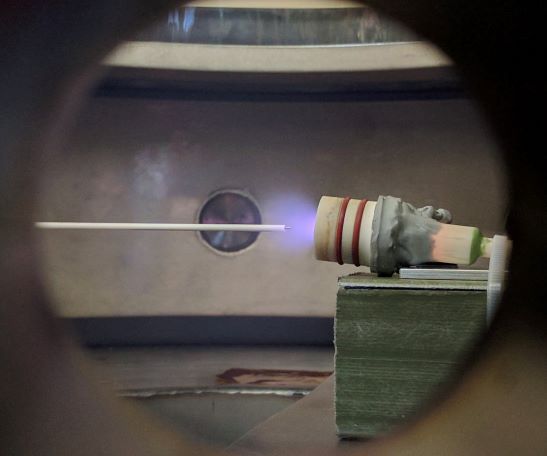
Personal work involved integration of a researcher’s experiment into a self-contained package to be placed on an experimental satellite to measure plasma exhaust properties to determine plasma thruster health. Following further development, this could extend satellite operation lifespan due to greater clarity on developing issues.
Main Role: Satellite Integration Engineer (intern), integrating electrical and physical systems
Weather Balloon CubeSat - Junior Project
Spring 2017
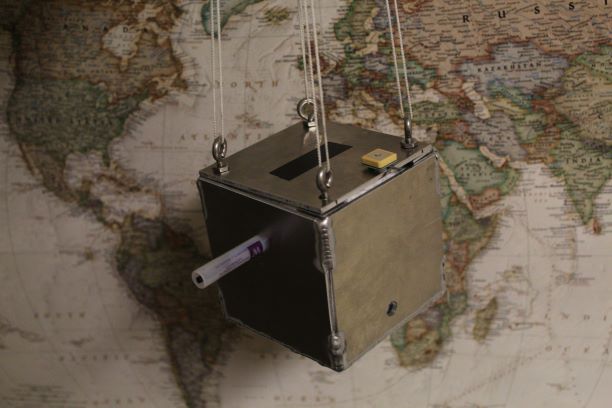
Team of four students developing a high-altitude instrumentation package in CubeSat package for flight on high altitude weather balloon. This was a class project to demonstrate research project pitches, and prepare for the senior-year capstone project with a smaller project.
Main Role: Systems Engineer integrating electronic sensors, hardware, and power systems
Husky Robotics Club
Fall 2015 – Summer 2018
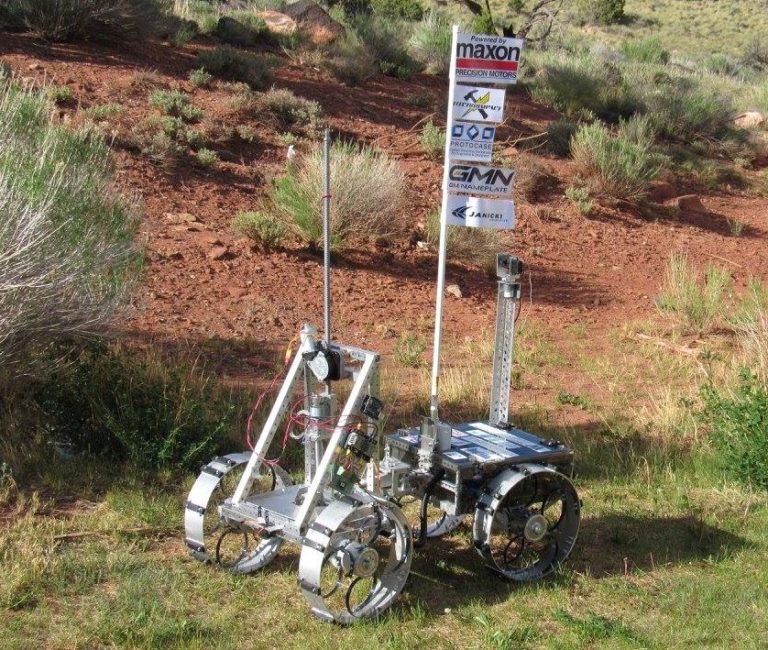
Large team designing Mars-like rovers to compete in international collegiate competitions. Personal work focused on chassis mechanical design and mechanical integration of cameras, antennas, etc.
Main Role: Mechanical Engineer
Major Contributions
Major contributions to the three years of projects included:
- Mechanical Design: Designed both individual parts and systems
- Project Leadership: Led several side-projects essential to rover operations, each with unique challenges separate from the rover
- Teaching: Taught and mentored several new members, teaching them on how to use 3D CAD, run a project, and approach a practical engineering problem
Project: Communications Tower
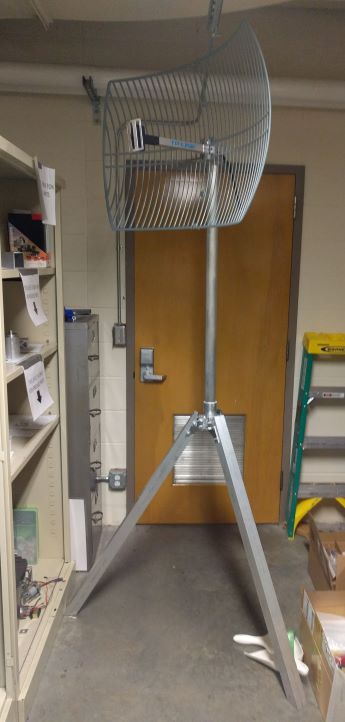 This was a side-project I was involved with from initial paper sketches through design reviews, manufacture, final assembly, and testing. As such, I was directly involved in nearly every aspect of the project.
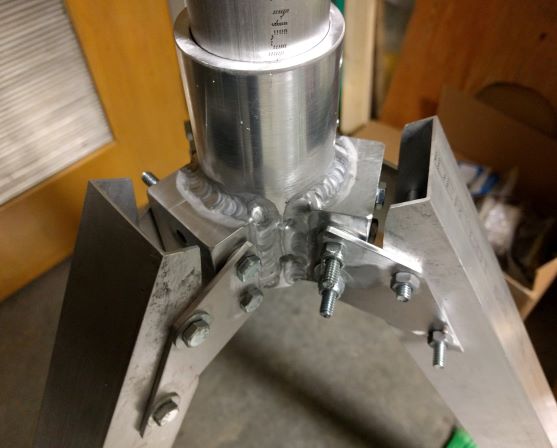
Additionally, this was my first design project freshman year of college, and the experience taught me the fundamentals of engineering project management and development that I would utilize through college and beyond.
The communications tower was constructed of three aluminum box channel legs mounted to a center base with a tower. The tower and legs were detachable from the base to meet a design requirement for easy storage in the trunk of a car.